

What Types of Wounds Need Negative Pressure Wound Therapy?
What Types of Wounds Need Negative Pressure Wound Therapy?
Table of Contents
ToggleQuick Summary
- Chronic Non-Healing Wounds – Diabetic foot ulcers and pressure sores that fail to heal with standard care often require NPWT to restart the healing process.
- Deep or Large Open Wounds – Wounds with significant depth or tissue loss benefit from suction that promotes granulation and faster closure.
- Surgical Wounds at Risk of Complications – Post-surgical wounds with swelling, drainage, or infection risk heal better with NPWT support.
- Traumatic Injuries – Open fractures, severe cuts, crush injuries, and burns use NPWT to control fluid, reduce infection, and protect healing tissue.
- Infected or High-Drainage Wounds – Wounds producing heavy fluid or bacteria need NPWT to remove contaminants and create a cleaner healing environment.
Negative Pressure Wound Therapy (NPWT) is an advanced wound treatment method that utilizes controlled suction to accelerate wound healing and enhance its effectiveness. It is commonly used for complex or non-healing wounds, including chronic conditions like diabetic foot ulcers and pressure sores, as well as acute traumatic injuries such as open fractures, deep cuts, and burns, especially when wounds cannot be safely closed right away.
In this blog, we’ll explain what negative pressure wound therapy is, how it works, and most importantly, what types of wounds benefit the most from this treatment. You’ll also learn when doctors typically recommend NPWT, who it’s best suited for, and when to consider speaking with a wound care specialist. Along the way, we’ll also explore how NPWT helps remove excess fluid, lowers infection risk, improves blood flow, and supports healthy granulation tissue, allowing wounds to heal more quickly and safely.
What Is Negative Pressure Wound Therapy?
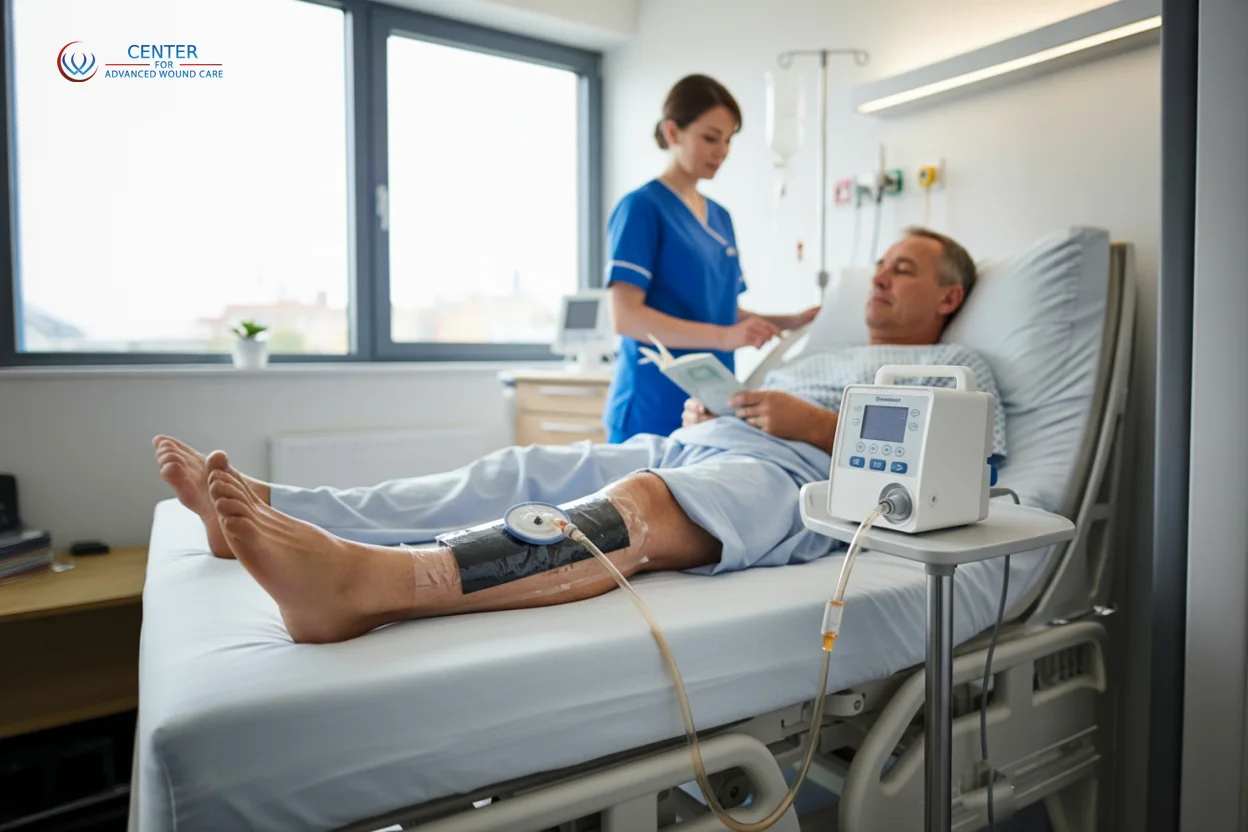
Negative pressure wound therapy is a medical treatment that uses a special dressing and a vacuum pump to gently remove excess fluid and bacteria from a wound. The suction also improves blood flow to the area, reduces swelling, and helps new tissue grow.
If you’d like a deeper explanation of how it works and why it’s effective, you can read our detailed guide here: What Is Negative Pressure Wound Therapy and How Does It Improve Wound Healing?. Now, let’s look specifically at negative pressure wound therapy uses and the types of wounds that benefit the most from it.
Why Certain Wounds Need Negative Pressure Wound Therapy
Not all wounds heal the same way. Some are deeper, more complex, or affected by poor circulation, infection, or repeated trauma. These wounds may stall in the healing process or reopen repeatedly. NPWT is typically recommended when a wound is deep or large, produces a high amount of drainage, and is slow to heal with standard dressings. It is also commonly used for wounds that have a high risk of infection or occur in patients with underlying conditions such as diabetes, poor circulation (vascular disease), or limited mobility, all of which can delay the natural healing process. Let’s explore the most common wound types treated with NPWT.
1. Surgical Wounds
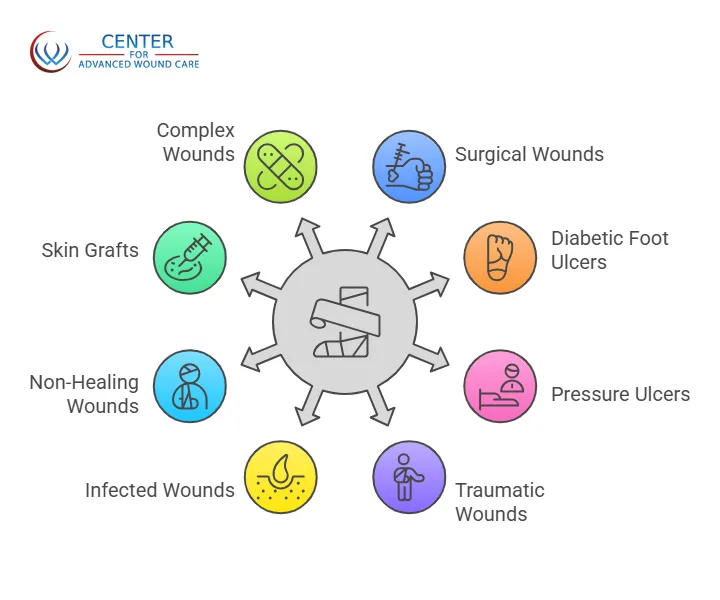
After major surgeries, especially orthopedic, abdominal, or reconstructive procedures, some incisions struggle to heal properly due to swelling, excess fluid buildup, or tension along the wound edges. In these cases, negative pressure wound therapy is often used to support faster and safer healing. NPWT helps prevent post-surgical infections by keeping the wound clean and dry, reduces swelling by removing excess fluid, and promotes healthy tissue growth that helps the incision close more efficiently. It also lowers the risk of the wound reopening, which is especially important for high-risk surgical sites such as joint replacements, C-sections, and open abdominal surgeries, where complications are more likely to occur.
2. Diabetic Foot Ulcers
Diabetic foot ulcers are among the most common and serious chronic wounds in the United States. Poor circulation and nerve damage caused by diabetes often make it difficult for patients to feel injuries early and for wounds to heal properly once they develop. As a result, even small sores can quickly become infected or worsen over time. Negative pressure wound therapy helps manage diabetic foot ulcers by improving blood flow to the affected area, removing excess fluid and bacteria, and promoting the growth of healthy granulation tissue. By creating a cleaner, well-oxygenated healing environment, NPWT can significantly lower the risk of complications, including infection and amputation, making it an essential tool in advanced diabetic wound care.
3. Pressure Ulcers (Bedsores)
Pressure ulcers develop when prolonged pressure restricts blood flow to the skin, most commonly affecting bedridden people, those with limited mobility, or use wheelchairs. These wounds typically form on bony areas such as the hips, tailbone, heels, and back. In advanced cases, especially Stage 3 or Stage 4 pressure ulcers, the damage can extend into deeper tissues, exposing fat, muscle, or even bone, which significantly increases the risk of infection and delayed healing. In such situations, Negative Pressure Wound Therapy (NPWT) is often recommended because it helps remove excess fluid, improves circulation to the affected area, reduces bacterial growth, and promotes healthy tissue formation, resulting in faster healing, better drainage control, lower infection risk, and improved overall patient comfort.
4. Traumatic Wounds
Traumatic wounds can result from accidents such as car crashes, falls, burns, or machinery injuries and are often deep, uneven, and contaminated with dirt or bacteria. Negative Pressure Wound Therapy (NPWT) helps manage these complex injuries by gently cleaning the wound environment, removing excess fluid, and reducing swelling and inflammation. It also prepares the wound bed for skin grafting or surgical closure while supporting healthy tissue growth and faster healing after severe trauma.
5. Infected or Non-Healing Wounds
Some wounds become chronic and fail to heal even after weeks or months of treatment due to infection, poor circulation, or ongoing irritation. In these cases, negative pressure wound therapy helps by controlling bacterial growth, managing heavy drainage, stimulating stalled healing, and improving oxygen and nutrient delivery to damaged tissues. This type of wound is commonly seen in patients with diabetes, vascular disease, obesity, or weakened immune systems, where the body’s natural healing response is reduced, and advanced wound care is often necessary.
6. Skin Grafts and Flaps
After reconstructive surgery, doctors often use skin grafts or tissue flaps to cover wounds, and Negative Pressure Wound Therapy (NPWT) is applied over these grafts to support proper healing. The controlled suction helps hold the graft securely in place, prevents fluid from building up underneath, and improves blood flow to the treated area. This creates an ideal environment for the graft to survive and integrate with the surrounding skin, significantly improving healing outcomes in reconstructive and plastic surgery cases.
7. Open Abdominal and Complex Wounds
In some situations, surgeons intentionally leave an abdominal wound open because of swelling, infection, or internal pressure that makes immediate closure unsafe. In these cases, Negative Pressure Wound Therapy (NPWT) plays a vital role in managing the wound safely until it can be closed. The controlled suction protects internal tissues, continuously removes excess fluid and drainage, lowers the risk of infection, and supports healthy tissue growth, allowing the wound to gradually stabilize and heal in a controlled and safer manner over time.
When Should You Consider NPWT?
You or your loved one may be a good candidate for NPWT if a wound has not shown signs of healing after two to four weeks, is deep, produces heavy drainage, or has a high risk of infection. It is also commonly recommended for people with diabetes, poor circulation, or chronic health conditions that slow healing. If standard wound dressings have not been effective, NPWT may offer better results. A wound care specialist can help determine the right treatment.
To explore the treatment in more detail, visit our Negative Pressure Wound Therapy service page.
Conclusion:
Negative pressure wound therapy is a powerful treatment for complex, slow-healing, and high-risk wounds. From diabetic ulcers and pressure sores to surgical and traumatic injuries, NPWT offers an effective way to improve healing, reduce infections, and prevent serious complications.
If you or someone you care for has a wound that isn’t healing properly, don’t wait. Early treatment can make a big difference in outcomes. Talk to a wound care expert today.
The team at the Center for Advanced Wound Care can evaluate your wound, recommend the best treatment plan, and guide you through every step of the healing process.
Frequently Asked Questions
1. What is negative pressure wound therapy used for?
Negative pressure wound therapy is used to treat complex, slow-healing, or high-risk wounds by removing excess fluid, reducing infection, and stimulating tissue growth.
2. What types of wounds benefit most from NPWT?
Diabetic ulcers, pressure ulcers, surgical wounds, traumatic injuries, burns, and infected or chronic wounds benefit most from NPWT.
3. Does NPWT help wounds heal faster?
Yes. NPWT improves blood flow, reduces swelling, and promotes granulation tissue, which can significantly speed up healing.
4. Is negative pressure wound therapy painful?
Most patients feel mild pulling or pressure, but not pain. Discomfort is usually minimal and manageable.
5. How long does NPWT treatment usually last?
Treatment duration varies but often lasts from a few days to several weeks, depending on wound size, depth, and healing response.
6. Can NPWT be used at home?
Yes. Many patients safely use portable NPWT devices at home under medical supervision.
7. Is NPWT safe for people with diabetes?
Yes. NPWT is commonly used for diabetic wounds and can reduce complications like infection and amputation risk.
8. Are there risks or side effects of NPWT?
Possible risks include skin irritation, bleeding, or infection if not monitored properly, but serious complications are rare when used correctly.
9. Who should not use NPWT?
NPWT may not be suitable for wounds with untreated infection, active bleeding, exposed organs, or certain cancerous wounds.
10. How do I know if my wound needs NPWT?
If your wound is deep, draining heavily, slow to heal, or keeps reopening, a wound care specialist can evaluate whether NPWT is appropriate.