


Can a Sebaceous Cyst Be Treated Without Surgery?
Can a Sebaceous Cyst Be Treated Without Surgery?
Table of Contents
ToggleQuick Summary:
- Many sebaceous cysts don’t require surgery — Small, painless, and non-infected cysts can often be managed with non-surgical skin cyst treatment options.
- Warm compresses are a first-line treatment — They improve circulation, reduce inflammation, and may help the cyst drain naturally.
- Topical and injectable treatments reduce symptoms — Antibiotics, anti-inflammatory creams, and steroid injections help control redness, swelling, and discomfort.
- Non-surgical treatment manages symptoms, not the capsule — This means the cyst may remain or return over time.
- Surgery is the only permanent removal option — Removing the cyst and its capsule prevents recurrence when the cyst becomes painful, infected, large, or repeatedly returns.
Sebaceous cysts are common skin lumps that many people notice unexpectedly and worry about. If you’ve discovered a bump under your skin, you may be wondering: Can a sebaceous cyst be treated without surgery? In this blog, we’ll explain what sebaceous cysts are, why they form, and the most common skin cyst treatment options available today, especially sebaceous cyst treatment without surgery. We’ll also discuss when surgery becomes necessary and what signs mean you should see a medical professional.
What Is a Sebaceous Cyst?
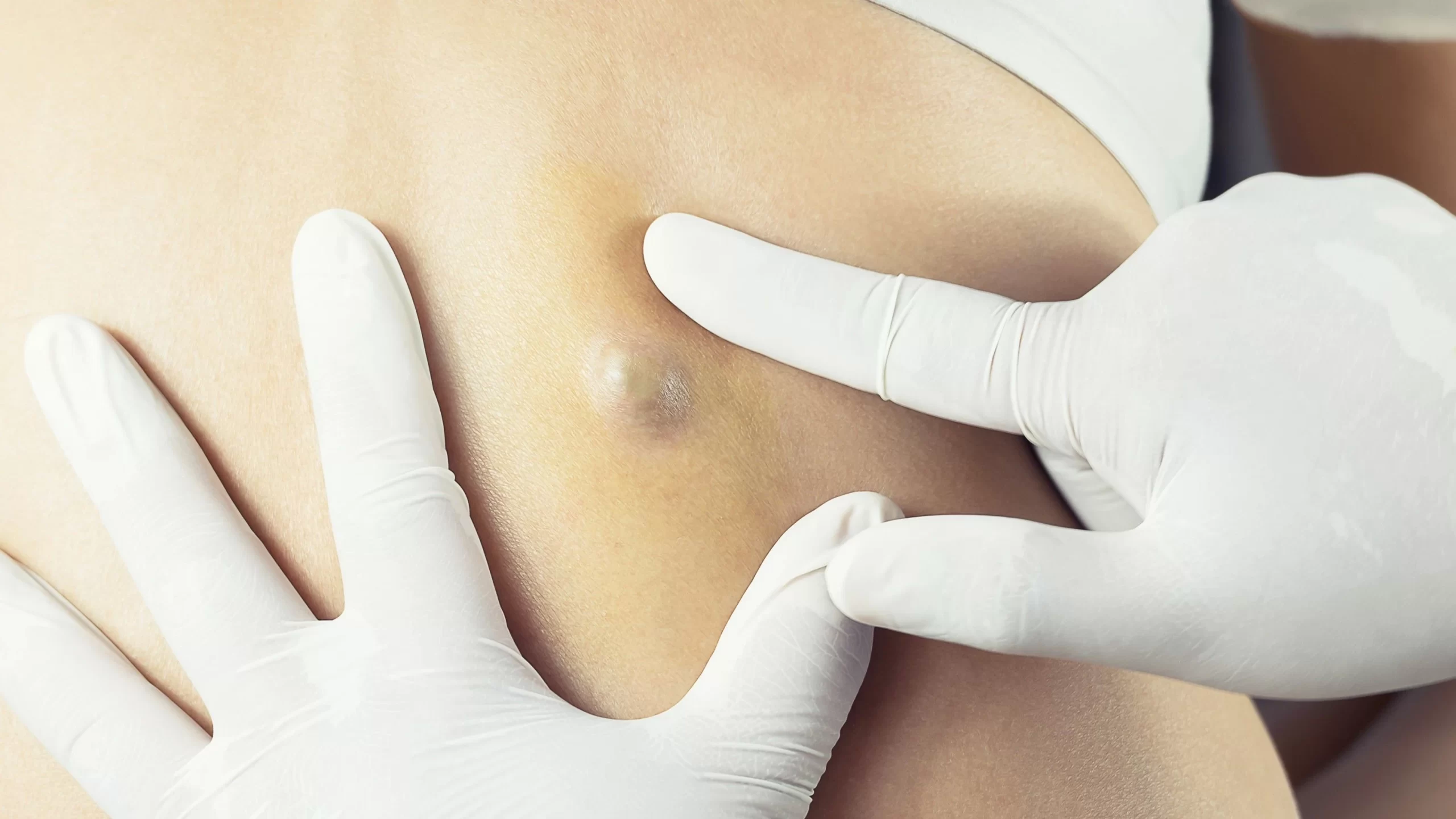
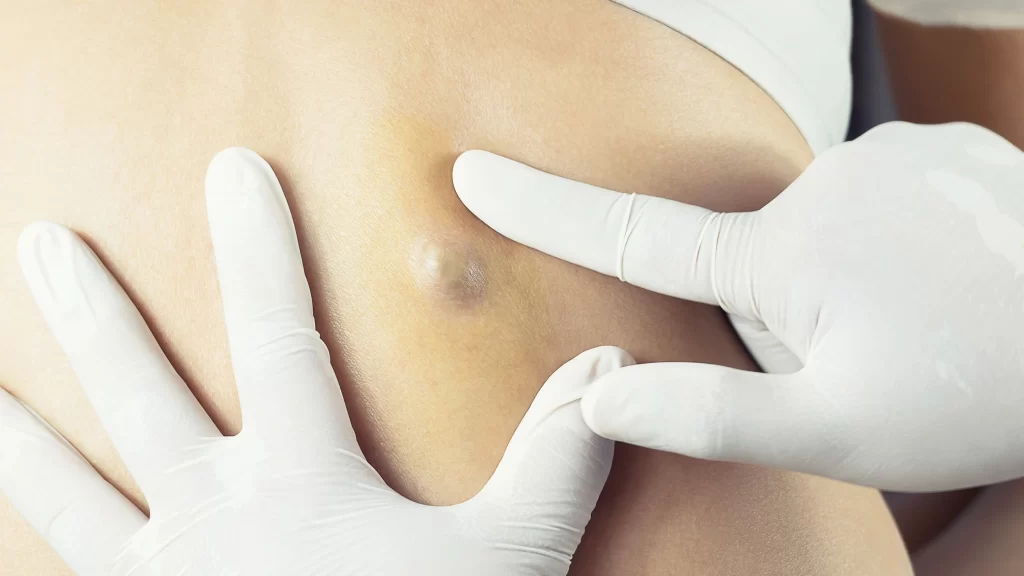
A sebaceous cyst is a non-cancerous, slow-growing lump that forms under the skin when oil, dead skin cells, or keratin become trapped. These cysts most commonly appear on the face, neck, scalp, back, and shoulders, and they are usually round or dome-shaped, soft to firm in texture, and painless unless they become inflamed or infected. While they are generally harmless, sebaceous cysts can become uncomfortable if they grow in size, get irritated by friction, or develop an infection.
Can a Sebaceous Cyst Be Treated Without Surgery?
Yes, in many cases, sebaceous cyst treatment without surgery is possible. If the cyst is small, not painful, and not infected, non-surgical treatments may help reduce symptoms and manage the cyst safely.
However, non-surgical methods do not remove the cyst’s capsule, which means the cyst may remain or return over time. That’s why understanding the right treatment approach is important.
Non-Surgical Skin Cyst Treatment Options
There are several skin cyst treatment options that do not involve surgery and are commonly recommended for mild or early-stage cysts.
Watchful Waiting:
When a sebaceous cyst is small, painless, and not changing in size, doctors often recommend a “watchful waiting” approach. This simply means keeping an eye on the cyst over time without active treatment. Many cysts remain stable for years and never cause any issues, so unnecessary intervention can often be avoided.
Warm Compresses:
Warm compresses are one of the simplest and most effective home-based options. Applying a warm, clean cloth to the cyst for about 10 to 15 minutes, two to three times a day, helps increase blood flow to the area. This can reduce inflammation, relieve mild discomfort, and sometimes encourage the cyst to drain naturally.
Topical Medications:
Topical treatments may be suggested if the skin around the cyst becomes slightly red, irritated, or tender. Antibiotic creams can help prevent infection, while anti-inflammatory creams can soothe the skin and reduce swelling.
Steroid Injections:
For cysts that are inflamed but not infected, a healthcare provider may recommend steroid injections. These injections help reduce inflammation from within, making the cyst less swollen, less noticeable, and more comfortable.
If a cyst drains naturally or is professionally drained, proper wound care becomes essential to prevent infection and promote healing. You can learn more about aftercare in this helpful guide, How to Treat a Sebaceous Cyst Wound at Home. These non-surgical methods are often effective for managing small, uncomplicated cysts safely and comfortably.
When Is Surgery the Better Option?
While sebaceous cyst treatment without surgery works for many people, surgery may be recommended when the cyst becomes troublesome. Surgical removal is usually considered if the cyst becomes painful, swollen, or infected, keeps coming back after non-surgical treatment, grows quickly or becomes large, interferes with daily activities, or causes cosmetic concerns. During the procedure, both the cyst and its capsule are removed, which greatly reduces the chance of the cyst returning. It is typically a minor outpatient treatment with a short recovery time and minimal disruption to daily life.
Conclusion
So, can a sebaceous cyst be treated without surgery? In many cases, yes especially when the cyst is small, painless, and not infected. Options like warm compresses, topical treatments, and steroid injections offer safe and effective ways to manage symptoms. However, if your cyst becomes painful, infected, keeps growing, or continues to return, surgical removal may be the best long-term solution.
If you’re unsure about the right approach for your situation or would like professional advice, we recommend speaking with a wound care specialist. You can reach out through our Contact Us page. Early guidance can help you avoid complications and ensure your skin heals properly.
Frequently Asked Questions
1. Can a sebaceous cyst go away without surgery?
Yes, a sebaceous cyst can sometimes shrink, drain naturally, or remain unchanged without surgery, especially if it is small and not infected. Warm compresses and proper skin care can help manage symptoms, but the cyst capsule usually remains, which means recurrence is possible.
2. What is the best non-surgical treatment for a sebaceous cyst?
The most effective non-surgical treatment is warm compress therapy combined with watchful monitoring. Warm compresses improve circulation, reduce inflammation, and may encourage drainage. Topical creams and steroid injections may be added if redness, swelling, or discomfort is present.
3. How long does it take for a sebaceous cyst to heal without surgery?
Healing time varies based on size, inflammation, and whether the cyst drains naturally. Small cysts may settle in a few weeks, while others remain for months or years. Non-surgical treatment focuses on symptom control rather than full removal.
4. Can antibiotics cure a sebaceous cyst?
Antibiotics can treat infection and reduce redness or swelling, but they do not remove the cyst itself. The cyst capsule remains under the skin, so antibiotics alone cannot permanently cure a sebaceous cyst or prevent it from coming back.
5. Are steroid injections safe for sebaceous cysts?
Yes, steroid injections are generally safe when administered by a medical professional. They reduce inflammation, swelling, and discomfort but do not remove the cyst. They are most helpful for inflamed but non-infected cysts and offer temporary symptom relief.
6. Will a sebaceous cyst always come back if not removed?
Not always, but recurrence is possible because the cyst capsule stays under the skin. Some cysts never return, while others refill over time. Surgical removal is the only method that permanently prevents the cyst from coming back.
7. When should a sebaceous cyst be surgically removed?
Surgical removal is recommended when the cyst becomes painful, infected, grows quickly, interferes with daily activities, causes cosmetic concerns, or keeps coming back after non-surgical treatment. Removing the cyst and its capsule helps prevent recurrence.
8. Is sebaceous cyst removal painful?
Sebaceous cyst removal is usually done under local anesthesia, so patients feel little to no pain during the procedure. Mild soreness or tenderness may occur afterward, but recovery is typically quick, and most people return to normal activities within a short time.
9. Can sebaceous cysts become dangerous?
Sebaceous cysts are usually harmless, but complications can occur if they become infected, rupture, or grow rapidly. Signs like increasing pain, redness, warmth, pus, or fever should be medically evaluated to prevent further problems or skin damage.
10. Can home remedies completely cure a sebaceous cyst?
Home remedies can reduce symptoms and improve comfort but cannot remove the cyst capsule. This means home care is not a permanent cure. It helps manage small, uncomplicated cysts but does not prevent the possibility of recurrence.