


Are Sebaceous Cysts Dangerous? What to Do if You Have an Infected Sebaceous Cyst
Are Sebaceous Cysts Dangerous? What to Do if You Have an Infected Sebaceous Cyst
Table of Contents
ToggleQuick Summary:
- Most Sebaceous Cysts Are Harmless — These common skin lumps are usually benign and painless unless they become inflamed or infected.
- Infection Is the Main Risk — An infected sebaceous cyst can turn red, swollen, painful, and drain pus, making it a medical concern.
- Squeezing Increases Complications — Popping or picking a cyst pushes bacteria deeper into the skin and raises the risk of rupture and scarring.
- Early Care Reduces Worsening — Gentle cleansing, warm compresses, and avoiding friction help manage symptoms and prevent spread.
- Warning Signs Signal Action — Rapid growth, spreading redness, foul drainage, or severe pain indicate the cyst is no longer harmless.
Sebaceous cysts are common skin lumps that many people notice on their face, scalp, neck, back, or chest. In most cases, they are harmless and slow-growing. Still, many people worry: are sebaceous cysts dangerous, and what should you do if you develop an infected sebaceous cyst? In this blog, we’ll explain what sebaceous cysts are, when they can become risky, how to recognize an infection, what causes infections, what steps you should take at home, what mistakes to avoid, and when professional care becomes important.
What Is a Sebaceous Cyst?
A sebaceous cyst is a closed sac beneath the skin filled with keratin, a thick, oily substance. These cysts usually form when a hair follicle or oil gland becomes blocked or damaged. They commonly appear on the face, neck, shoulders, scalp, chest, and back.
Sebaceous cysts usually grow slowly and feel smooth or slightly firm to the touch. They tend to move easily under the skin and are generally painless when they are not infected. In many cases, they remain the same size for long periods without causing discomfort or affecting daily activities.
Many people live with sebaceous cysts for years without any problems. They are considered benign and are often more of a cosmetic concern than a medical one—unless they become inflamed or infected.
Are Sebaceous Cysts Dangerous?
Most of the time, sebaceous cysts are not dangerous. However, the risk increases when the cyst becomes irritated, ruptures, or gets infected. While the cyst itself is non-cancerous, complications can occur if bacteria enter the cyst.
People usually start asking are sebaceous cysts dangerous when they notice changes such as:
- Sudden growth
- Redness around the lump
- Pain or tenderness
- Drainage with a bad smell
- Warmth over the skin
- Repeated inflammation in the same area
At this stage, the cyst is no longer just a harmless bump. It can interfere with daily activities like sleeping, shaving, working out, or wearing tight clothing. Trying to pop or squeeze a cyst at home often makes things worse by pushing bacteria deeper into the skin and increasing the chance of infection and scarring.
Some people also explore whether cysts can settle down on their own without procedures. While this may happen with small, non-infected cysts, it’s important to understand when home care is safe and when medical attention is needed. Learn more about your options in this guide on can a sebaceous cyst be treated without surgery.
This explains realistic expectations and when professional care becomes the safer option.
What Is an Infected Sebaceous Cyst?
An infected sebaceous cyst occurs when bacteria enter the cyst through small cuts in the skin, shaving nicks, friction from clothing, or squeezing the lump. Once infected, the cyst often changes quickly and becomes uncomfortable.
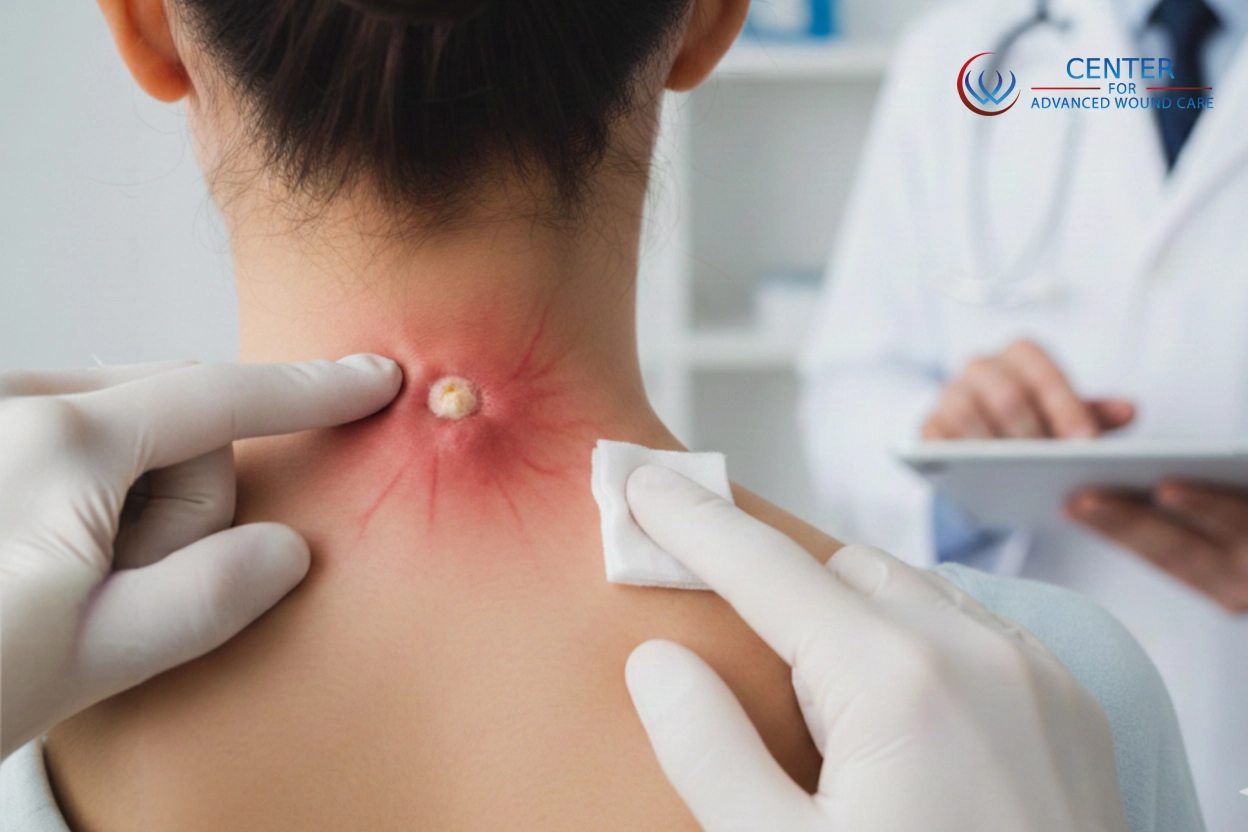
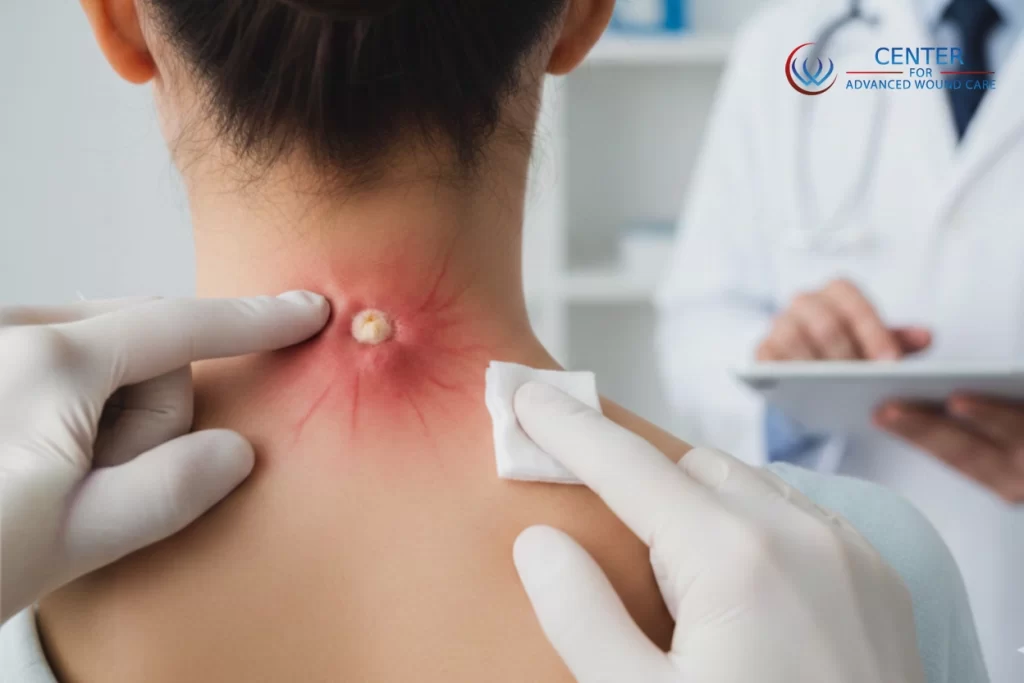
Common signs of infection include red or purple discoloration around the lump, noticeable swelling and tightness of the skin, throbbing or worsening pain, warmth in the affected area, thick yellow or green drainage that may have an unpleasant odor, and skin that appears stretched or shiny due to inflammation and pressure buildup.
Unlike a regular lump, an infected one is painful and tender to touch. It may feel harder because of inflammation and can grow faster over a short period. If pressure builds up inside, it may rupture under the skin, causing deeper irritation and longer healing time.
Why Do Sebaceous Cysts Become Infected?
Sebaceous cysts become infected when bacteria enter the blocked sac. This often happens because of:
- Picking or squeezing
- Shaving over the cyst
- Friction from tight clothing
- Poor skin hygiene
- Repeated irritation
- Minor injuries near the cyst
Once bacteria are inside, the body reacts with inflammation. This is what causes redness, swelling, warmth, and pain. Even a harmless cyst can become painful and inflamed if it is handled improperly.
What to Do If You Have an Infected Sebaceous Cyst
If you think you’re dealing with an infected sebaceous cyst, taking the right steps early can help reduce pain, prevent the infection from spreading, and protect your skin from long-term damage. While mild care can help manage discomfort, it’s important to avoid actions that may worsen the infection.
Don’t Squeeze, Pop, or Pierce the Cyst
It may feel tempting to pop a painful cyst, but doing so can push bacteria deeper into the skin. This can cause the cyst to rupture internally, leading to more swelling, redness, and delayed healing. Squeezing also increases the risk of scarring and can spread infection to nearby skin.
Keep the Area Gently Clean
Clean the area once or twice a day using mild soap and lukewarm water. Pat the skin dry with a clean towel. Avoid harsh cleansers, scrubs, alcohol, hydrogen peroxide, or iodine, as these can irritate the skin and slow the natural healing process.
Apply Warm Compresses Regularly
Using a warm compress for about 10–15 minutes, two to three times daily, can help reduce pressure and discomfort. Warmth improves blood flow to the area, which supports your body’s natural healing response. It may also help the cyst drain on its own without forcing it open.
Protect the Area From Friction and Pressure
Avoid tight clothing, belts, or repeated rubbing over the cyst. Friction can increase inflammation and pain. If the cyst is in an area that gets irritated easily, cover it lightly with a clean, breathable bandage to protect the skin from dirt and bacteria.
Avoid Applying Random Home Remedies
Strong essential oils, toothpaste, baking soda, or unknown creams can irritate the skin and worsen inflammation. Stick to simple, gentle care unless advised otherwise by a healthcare professional.
Monitor Symptoms Closely
Pay attention to changes in size, color, warmth, and pain. If redness spreads, swelling increases, or thick pus continues to drain, it may mean the infection is worsening. Also watch for signs like fever or chills, which may indicate a more serious infection..
Support Healing With Good Hygiene Habits
Wash your hands before touching the area, change bandages regularly if there is drainage, and avoid sharing towels or clothing that come into contact with the cyst. These small steps help prevent the spread of bacteria to other areas of your skin.
Conclusion
So, are sebaceous cysts dangerous? Most of the time, no. But when an infected sebaceous cyst develops, it can become painful, swollen, and harder to manage without proper care. Avoid squeezing cysts, keep the area clean, use warm compresses, and watch closely for signs of infection. Early attention can help reduce discomfort and prevent long-term skin issues.
If you’re dealing with a painful or infected cyst and want professional guidance for proper wound care and healing, it’s best to speak with a medical expert. You can reach out to a wound care specialist through the Contact Us page to get personalized support and care options.
Getting timely support can make a big difference in healing safely and comfortably.
Frequently Asked Questions
1. Are sebaceous cysts dangerous or cancerous?
Sebaceous cysts are almost always benign and not cancerous. They develop when hair follicles or oil glands become blocked, forming a slow-growing lump under the skin. While the cyst itself is not dangerous, problems can arise if it becomes inflamed or infected. Signs like redness, pain, warmth, and pus indicate infection rather than cancer. If a lump changes rapidly in size, color, or becomes persistently painful, medical evaluation is recommended to rule out other skin conditions.
2. What causes an infected sebaceous cyst?
An infected sebaceous cyst happens when bacteria enter the cyst, usually through small breaks in the skin. Common triggers include squeezing or popping the cyst, shaving over it, friction from tight clothing, or repeated irritation. Once bacteria are trapped inside the cyst, the body reacts with inflammation, leading to redness, swelling, warmth, and pain. Poor hygiene around the area can also increase the risk of infection, especially in areas prone to sweat and friction.
3. How can you tell if a sebaceous cyst is infected?
You can tell a sebaceous cyst is infected when it becomes painful, red, swollen, and warm to the touch. The skin over the cyst may look shiny or tight, and the lump may grow faster than usual. Thick yellow or green drainage with a foul smell is another clear sign of infection. Unlike a normal cyst, an infected sebaceous cyst is tender and may throb. These symptoms mean the cyst needs proper care and monitoring.
4. Should you pop an infected sebaceous cyst at home?
No, you should never pop or squeeze an infected sebaceous cyst at home. Doing so can force bacteria deeper into the skin, increase inflammation, and cause the cyst to rupture internally. This can lead to more pain, swelling, scarring, and delayed healing. Popping a cyst also raises the risk of spreading infection to nearby skin. Gentle care and avoiding pressure on the cyst are safer approaches than attempting to drain it yourself.
5. What happens if an infected sebaceous cyst is left untreated?
If an infected sebaceous cyst is left untreated, the infection can worsen and cause increased pain, swelling, and drainage. Pressure may build up inside the cyst, leading to rupture under the skin, which can irritate surrounding tissue and slow healing. Ongoing infection can also lead to scarring and repeated flare-ups in the same spot. Ignoring symptoms may prolong discomfort and increase the chance of complications, especially in areas exposed to friction or moisture.
6. Can sebaceous cysts go away on their own?
Some small, non-infected sebaceous cysts may remain stable for long periods without treatment and cause no symptoms. However, they usually do not disappear completely on their own. Infected or inflamed cysts are less likely to settle without proper care. While gentle care may reduce discomfort, cysts often persist because the sac remains under the skin. Changes in size, pain, or drainage suggest the cyst needs closer attention rather than waiting it out.
7. What are common places sebaceous cysts appear?
Sebaceous cysts commonly appear on the face, scalp, neck, shoulders, chest, and back. These areas have many hair follicles and oil glands, making them more prone to blockages. Cysts can also form in areas exposed to friction, such as underarms or inner thighs. While location does not determine danger, cysts in high-friction areas may become irritated more easily, increasing the risk of inflammation or infection over time.
8. How do sebaceous cysts become painful?
Sebaceous cysts become painful mainly when they are inflamed or infected. Pain occurs due to swelling, pressure buildup inside the cyst, and the body’s inflammatory response. Friction from clothing, shaving, or repeated touching can also irritate the cyst and cause soreness. A painless cyst turning tender is often a sign of infection. The discomfort may increase as the cyst grows or if it begins to drain pus.
9. Can infected sebaceous cysts come back?
Yes, infected sebaceous cysts can come back, especially if the cyst sac remains under the skin. Even if swelling goes down, the cyst may refill over time. Repeated irritation, friction, or squeezing increases the chance of recurrence. Some people experience flare-ups in the same spot multiple times. Paying attention to early signs of infection and avoiding pressure on cysts can help reduce how often they return.
10. How can you prevent sebaceous cysts from getting infected?
You can lower the risk of infection by avoiding squeezing or picking at cysts, keeping the area clean, and reducing friction from tight clothing. Gentle skin care and proper hygiene help prevent bacteria from entering the cyst. Be cautious when shaving near a cyst and avoid harsh products that irritate the skin. Monitoring cysts for early signs of redness or pain can help you act early and prevent infections from getting worse.