


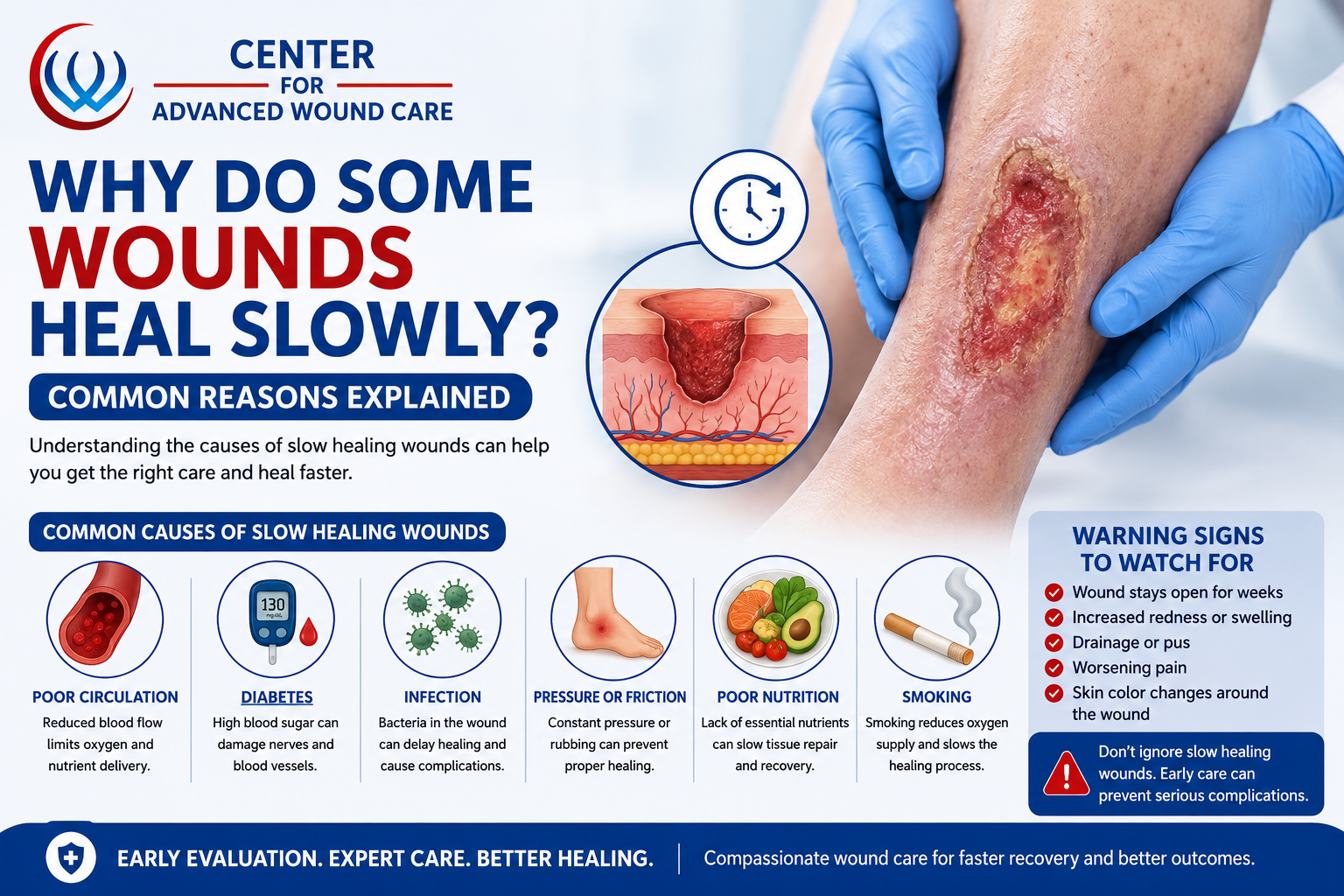
Why Do Some Wounds Heal Slowly? Common Reasons Explained
Why Do Some Wounds Heal Slowly? Common Reasons Explained
Table of Contents
ToggleQuick Summary:
- Poor circulation, infection, diabetes and other health conditions can cause wounds to heal slowly.
- Chronic wounds are wounds that don’t heal as fast as they should because they disrupt the body’s natural healing process.
- Especially wounds to the legs and feet tend to have problems healing.
- Tissue repair may be impaired by inadequate nutrition and reduced oxygen supply.
- Prompt wound care and medical attention can prevent complications.
Wound healing is the body’s natural repair process of damaged skin and tissue. Some wounds heal in days or weeks and some wounds take much longer to heal. Slow healing painful wounds can cause infection and can impact a person’s quality of life.
If you have a wound that is not healing properly, it could be a sign of an underlying health problem or circulation problem. Knowing the common causes of delayed wound healing can help patients tell when they might need medical help.
Poor Blood Circulation and Slow Wound Healing
Good blood circulation is necessary for wound healing to provide oxygen and nutrients to the injured tissue.
When the circulation is poor:
- Cut off oxygen supply
- The wound may not receive nutrients
- Waste products can accumulate in the tissue
Poor circulation is a common cause of slow-healing wounds, particularly in the legs and feet.
Slow Healing Wounds on the Legs
Leg wounds take longer to heal because circulation issues slow blood flow to the area.
Slow Healing Wounds on the Feet
Wounds on the foot can be difficult to heal if there is pressure on the tissue or poor circulation.
Infection and Diabetes: Common Causes of Slow Healing Wounds
Certain health problems affect the body’s ability to heal itself.
Diabetes and Slow Wound Healing
The influence of diabetes on wound healing. High blood sugar can damage blood vessels and nerves, meaning circulation is restricted and tissue does not heal as quickly.
People with diabetes may also:
- Decreased sensation in feet
- More easily get infections
- Take longer to heal from injury
Small wounds can become chronic if not treated properly.
Infection and Slow Wound Healing
Infected wounds heal more slowly because your body is trying to fight the bacteria and fix the damaged tissue.
Symptoms of infection include:
- Redness
- Swelling
- Heat around the wound
- Discharge or pus
- Increased pain
Untreated infection can delay wound healing significantly.
Pressure, Swelling, and Lifestyle Factors That Delay Healing
Some wounds take longer to heal because of repeated pressure, swelling or lifestyle factors.
Constant Pressure or Friction
Applying pressure to a wound would stop blood flow. It could cause further injury to the tissue.
This commonly affects:
- Heels
- Feet
- Ankles
- Zones under sustained stress
Relieving pressure to the area can help healing.
Swelling Around the Wound
Swelling in the legs or feet can be excessive and put pressure on the wound, which delays tissue healing.
Fluid build up may:
- Stretch the skin
- Reduce oxygen supply
- Slow healing
Poor Nutrition
The body needs nutrients to repair the skin and tissue in a proper way.
Important nutrients for wound healing include:
- Protein
- Vitamin C
- Zinc
- Iron
A poor diet can impact how well the body heals wounds.
Smoking and Reduced Oxygen Supply
Smoking constricts blood vessels and reduces the amount of oxygen in the blood, limiting circulation to damaged tissue.
It could:
- Delay wound healing
- Increase infection risk
- Slow healing of wounds
Smoking is a significant risk factor for chronic wounds.
Signs of Slow Healing Wounds
Some injuries don’t show warning signs right away, and they take time to heal. But there are some indications that could point to delayed healing.
The Wound Remains Open
If a wound stays open for several weeks without getting better it may need medical attention.
Increased Redness or Swelling
Increased redness, swelling or tenderness may indicate infection or inflammation.
Continuous Drainage
If there’s ongoing drainage or leakage from a wound, it might not be healing properly.
Pain That Gets Worse Over Time
Usually, the pain of wounds gets less as they heal. Increased pain may indicate a complication.
Skin Color Changes Around the Wound
If the skin around the wound is discolored, pale, or darkened, this indicates tissue damage or poor circulation.
Why You Should Never Ignore Slow Healing Wounds
Untreated delayed wound healing may be associated with an increased risk of complications.
Increased Risk of Infection
Open wounds are a portal of entry of bacteria into the body. Chronic wounds are more susceptible to infection.
Tissue Damage
Poor circulation and chronic inflammation can damage surrounding skin and tissue over time.
Reduced Mobility
Sores on the feet or legs that hurt can make it difficult to walk and do everyday things.
Development of Chronic Wounds
Some wounds can become chronic and worsen if left untreated.
Early visit to the doctor helps to identify the cause and it can heal well.
Conclusion
Poor circulation, diabetes, infection, swelling, repeated pressure, poor nutrition or smoking can cause slow healing wounds. Some wounds take longer to heal than others but you should not ignore wounds that remain open or get worse.
Recognizing common causes of poor wound healing will help patients know when to seek professional help. Proper wound care and prompt treatment can reduce the risk of complications and help your body to heal naturally.
Frequently Asked Questions
1. Why do wounds heal more slowly?
There are many reasons why a wound may take a long time to heal, including poor circulation, diabetes, infection, swelling, pressure, smoking and poor nutrition.
2. Slow healing wound time for healing
A wound that has not healed well after several weeks may be described as slow healing, or chronic.
3. Why do wounds on the legs heal so slowly?
Leg wounds can take longer to heal if circulation problems reduce the amount of blood and oxygen reaching the wound.
4. How does diabetes affect wound healing?
Yes, diabetes can damage blood vessels and nerves and this can make it harder for wounds to heal well.
5. How do you tell if a wound isn’t healing fast enough?
Symptoms can include redness, swelling, drainage, increased pain and wounds that don’t heal for extended periods of time.
6. How does bad circulation affect wound healing?
Yes, less blood flow, less oxygen and nutrients to help heal the tissues.
7. When should I call the doctor about a wound?
A wound might need medical attention if it gets infected, stays open for weeks, or gets worse over time.