


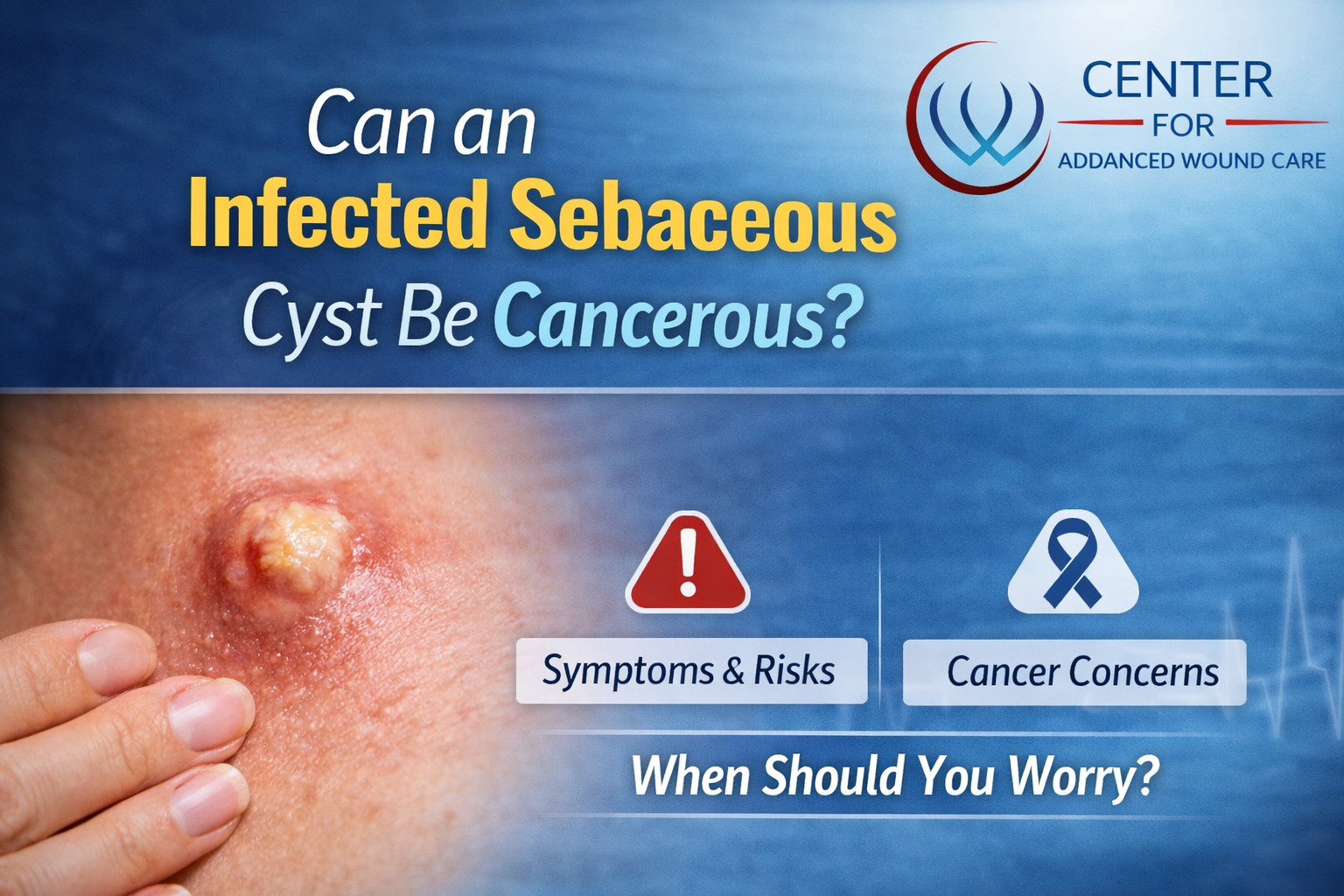
Can an Infected Sebaceous Cyst Be Cancerous? Symptoms & When to Worry
Can an Infected Sebaceous Cyst Be Cancerous? Symptoms & When to Worry
Table of Contents
ToggleQuick Summary:
- Most sebaceous cysts that are infected are not malignant and are usually not dangerous.
- Infection can cause discomfort, redness, swelling, and pus to occur.
- In rare circumstances, cyst-like lumps may need to be checked by a doctor to be sure they aren’t malignancy.
- Knowing the symptoms that something is wrong can help you determine when to consult a doctor.
- A quick diagnosis makes sure that treatment is safe and works.
Sebaceous cysts are skin lumps that can show up anywhere on the body. When they are infected, they can seem scary and hurt. This often makes people wonder: Can a sebaceous cyst that is infected be cancerous?
The short answer is that most sebaceous cysts that are infected are not malignant. But it’s still vital to know the difference between a harmless cyst and something that could be worse. Knowing what to look for can help you do the correct thing at the right moment.
What Is an Infected Sebaceous Cyst?
When a hair follicle or oil gland gets clogged, a sebaceous cyst occurs. It is a little lump under the skin. Most of the time, these cysts are filled with a soft, cheese-like substance. It is possible for the cyst to get infected when germs get into it. This causes changes in how things look and how they feel.
Signs that you might have an infection
- Redness surrounding the cyst
- Swelling and pain
- Pain or discomfort
- Warm skin on the spot
- Fluid or pus coming out
Is it possible for an infected sebaceous cyst to be cancerous?
The answer is usually no. Sebaceous cysts are not malignant, which means they are not dangerous. But there are also rare cases where a bump that appears like a cyst can be something different. This is why it’s crucial to get the right diagnosis.
Why People Worry
- The lump grew quickly.
- Pain or strange symptoms
- Changes in colour or feel
These changes can make the cyst look worse, even if it isn’t malignancy.
The Truth
It is very rare for a sebaceous cyst to turn into malignancy. Most infections just make you feel bad and inflamed, not cancer. It’s always a good idea to check if something feels off, though.
Signs That You Need to See a Doctor
Most cysts aren’t dangerous, but you shouldn’t overlook some signs.
- Things to Look Out For
- Quickly getting bigger
- Pain that doesn’t go away
- Bleeding or sores
- Shape that is hard or not regular
- Changes in the colour of the skin
If you see any of these indicators, you should see a doctor right away. These signs don’t always signify cancer, but you should get them checked out.
Infected Sebaceous Cyst vs Cancer – the main differences
Knowing the difference between a typical infected cyst and a malignant mass can help you feel less anxious.
Sebaceous Cyst with Infection
- Not too soft or too hard
- Moves beneath the skin
- Could have pus in it
- When infected, it hurts.
- Often gets better with treatment
Possible Lump That Could Be Cancer
- Hard and not moving
- Shape that isn’t regular
- Not painful at first
- Grows steadily throughout time
- Could modify the skin
A doctor can confirm the diagnosis by doing tests and an examination if necessary.
Ways to Treat an Infected Sebaceous Cyst
The treatment depends on how bad the infection is.
1. Antibiotics
Doctors may provide antibiotics to people with infected cysts to help control the infection.
2. Drainage
Sometimes, the cyst needs to be drained to get rid of pus and relieve pressure.
3. Small surgery to remove
If the cyst keeps coming back, it may be best to get rid of it completely.
4. Care by Professionals
It is crucial to see an expert for safe and effective therapy. You may find specialist assistance for treating wounds and cysts at Center for Advanced Wound Care.
When do you need to see a doctor?
If you have any of the following, it’s crucial to see a doctor:
- The cyst hurts a lot.
- It expands swiftly.
- There is a persistent infection.
- It doesn’t get better over time.
- You don’t know what the diagnosis is.
Getting help early on helps avoid problems and makes sure you get the right care.
How to Keep Sebaceous Cysts from Getting Infected
You can’t stop all cysts from forming, but you can lower the chance of infection.
- Don’t squeeze or pick at the cyst.
- Keep the area tidy
- Keep your hygiene up
- Take care of skin injuries right away
These methods can help keep you from getting irritated and sick.
Conclusion
An infected sebaceous cyst may seem bad, but it is not malignant in most circumstances. The infection may hurt, swell, and turn red, but it usually doesn’t mean anything dangerous.
But it’s crucial to pay attention to the symptoms of trouble. It is always best to have a cyst checked out if it changes size, shape, or behaviour.
Early evaluation gives you peace of mind and makes sure you get the right care. You can call the Centre for Advanced Wound Care if you have questions or need professional help with a wound.
Frequently Asked Questions
1. Can a sebaceous cyst that is infected become cancerous over time?
Sebaceous cysts usually don’t turn into malignancy. They are not dangerous and will stay that way. If a cyst changes in size, form, or look over time, though, you should get it checked out. A lump may be misdiagnosed, but a comprehensive medical evaluation makes sure that the diagnosis is correct and gives you piece of mind.
2. How can I tell if my cyst is infected or anything else?
A cyst that is infected usually turns red, swells, hurts, and may make pus. It could feel heated and sore. A more serious ailment may include a hard lump, an odd shape, or changes in the skin that are not normal. If you’re not sure, it’s advisable to see a doctor for a full evaluation.
3. Is it safe to pop an infected sebaceous cyst at home?
No, it is not safe to pop or squeeze a cyst at home. This could make the infection worse, hurt, and cause problems. It could also push bacteria deeper into the skin. If necessary, doctors employ safe procedures to treat and drain cysts.
4. Can a cyst that is sick heal on its own without any help?
Some mild infections may get better on their own, but most need medical care such antibiotics or drainage. If you ignore an infected cyst, your symptoms may get worse. It’s preferable to keep an eye on it and get care if you need it.
5. What is the best way to treat a sebaceous cyst that is infected?
The best treatment depends on how bad it is. Antibiotics, draining, or little surgery are all typical choices. A doctor will suggest the best treatment for you based on your health.
6. When should I be concerned about a sebaceous cyst?
If the cyst grows quickly, hurts a lot, changes shape, or doesn’t heal, you should be worried. These indicators need to be checked out by a doctor to make sure they aren’t serious.
7. Is it possible for a sebaceous cyst to come back after treatment?
Yes, cysts might come back if the whole wall of the cyst is not taken out. Getting the right medical care lowers the risks of it happening again.